Back to the herb list
 Angelica
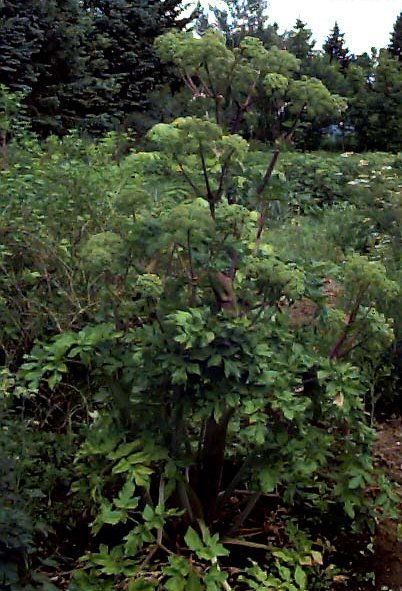
(Angelica archangelica): Drink the tea to stimulate
the appetite, relieve flatulence, and as a diuretic to stimulate kidney
action. Also a general tonic for weakness and nervous headache. The tea
is supposed to bring on menstruation and dispel afterbirth. The powder
of the root is useful to prevent infection when fasting (3/8 tsp at a time)
and a tea or decoction of the root can be useful for stomach and intestinal
problems, including ulcers and nervous vomiting. In large doses can have
adverse effects on heart, blood pressure and respiration, so use with caution.
Externally, a decoction of the root can be used for scabies or itching
skin.
Angelica
(Angelica archangelica): Drink the tea to stimulate
the appetite, relieve flatulence, and as a diuretic to stimulate kidney
action. Also a general tonic for weakness and nervous headache. The tea
is supposed to bring on menstruation and dispel afterbirth. The powder
of the root is useful to prevent infection when fasting (3/8 tsp at a time)
and a tea or decoction of the root can be useful for stomach and intestinal
problems, including ulcers and nervous vomiting. In large doses can have
adverse effects on heart, blood pressure and respiration, so use with caution.
Externally, a decoction of the root can be used for scabies or itching
skin.
Elements of Sun and Fire. The root carried in a blue cloth bag is a protective talisman.
Was considered to be under the guard of angels and therefore a good preventative
charm against the plague. Put the whole root in a blue or white cloth bag
and hang in the window as a protection against evil.
Back to the herb list
Anise
(Pimpinella anisum): Internally, relieves colic,
stomach cramps, nausea and flatulence. Promotes digestion and improves
the appetite. Is said to aid milk production in nursing mothers. Externally,
makes a soothing eye compress. Can also be used for coughs. A few seeds
in a glass of hot milk before bed is said to be beneficial for insomniacs
and to promote sleep.
Back to the herb list
Catnip
(Nepeta cataria): The tea is used to treat colds,
chills and fever, as it produces mild perspiration and induces sleep without
increasing the fever. Also soothes nervous headaches, and will promote
sleep. Can be taken for stomach pain and flatulence. Believed to bring
on menstrual flow. Good to treat nervousness and restlessness, especially
in children, and can also be used for colic.
Back to the herb list
Cayenne
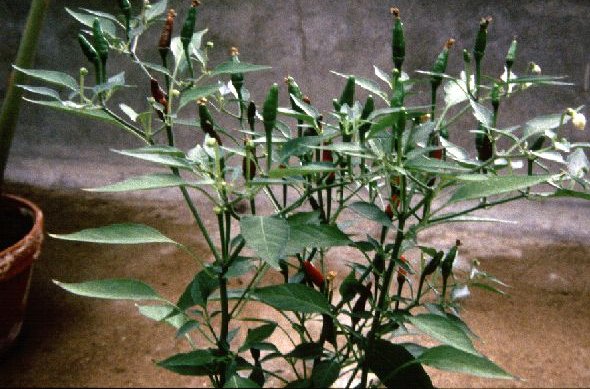
(Capsicum minimum): Can be used to relieve colds
and coughs, and is a local stimulant. Mrs. Grieve recommends it in cases
of alcohol addiction, as it reduces the dilated blood vessels.
Back to the herb list
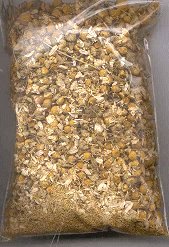
Chamomile
(German - Matricaria chamomilla, Roman - Anthemis
noblis): If drunk before bed, the tea will aid sleep. Used to soothe
nightmares and nervousness, for hysterical conditions, and to quiet fever
and restlessness in children. Also drunk for colic, stomach ache, diarrhea,
heartburn. Aids digestion. Can be used as a gentle healing wash for sores
and wounds. The oil, diluted in a carrier oil, or a salve made from simmering
the flowers in oil, can also be used as a rub for rheumatism, painful joints
and strained muscles. Externally chamomile makes a soothing bath additive
and can be used in a footbath to relieve sweaty feet.
Back to the herb list
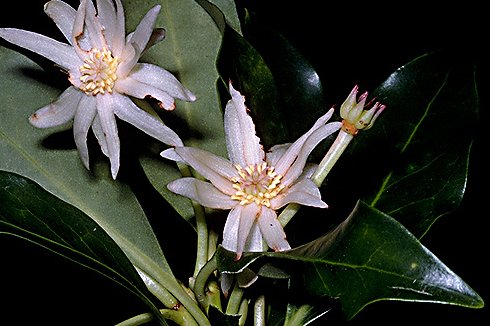
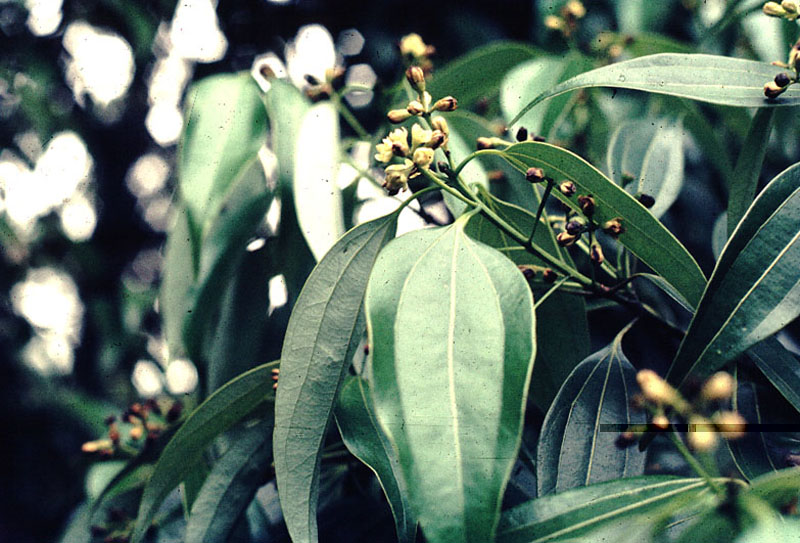
Cinnamon
(Cinnamomum zeylanicum): In tea form, makes an
excellent digestive aid. Will check nausea, diarrhea and vomiting. Is
a mild stimulant. Externally, can be used as a skin astringent and antiseptic.
Elements of Sun and Fire. Use in incenses for healing, clairvoyance, high spiritual vibrations.
Reputed to be a male aphrodisiac. Use in prosperity charms.
Back to the herb list
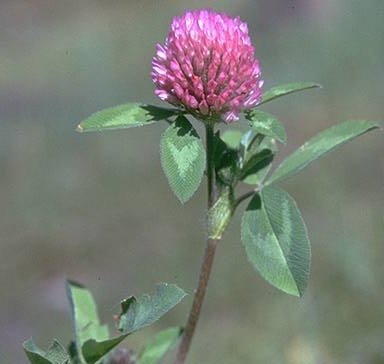
Clover
(Trifolium spp.): The fluid extract of Trifolium is used as an alterative and antispasmodic. An infusion made by 1 OZ. to 1 pint of boiling water may with advantage be used in cases of bronchial and whooping-cough. Fomentations and poultices of the herb have been used as localapplications to cancerous growths.
Back to the herb list
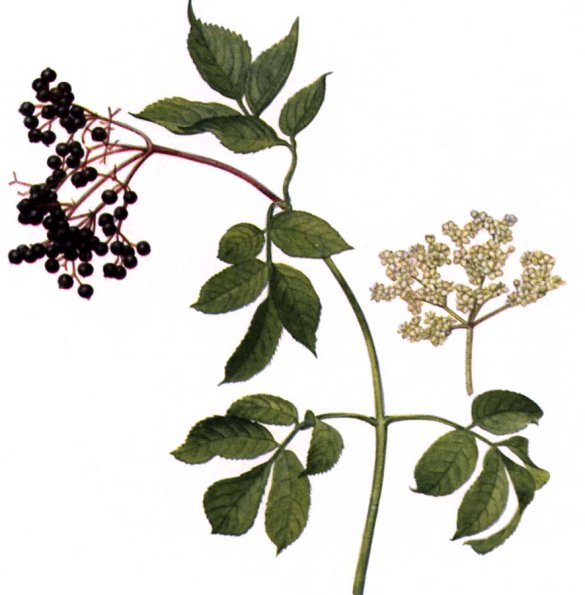
Elder
(Sambucus canadensis): The bark is a strong purgative which may be employed with advantage, an infusion of 1 OZ. in a pint of water being taken in wineglassful doses; in large doses it is an emetic. Its use as a purgative dates back to Hippocrates. It has been much employed as a diuretic, an aqueous solution having been found very useful in cardiac and renal dropsies. It has also been successfully employed in epilepsy. An emollient ointment is made of the green inner bark, and a homoeopathic tincture made from the fresh inner bark of the young branches, in diluted form, relieves asthmatic symptoms and spurious croup of children - dose, 4 or 5 drops in water. Elder leaves are used in the preparation of an ointment, Unguentum Sambuci Viride, Green Elder Ointment, which is a domestic remedy for bruises, sprains, chilblains, for use as an emollient, and for applying to wounds.The juice of Elder leaves is stated by the old herbalists to be good for inflammation of the eyes, and 'snuffed up the nostrils,' The flowers were used by our forefathers in bronchial and pulmonary affections, and in scarlet fever, measles and other eruptive diseases.
Back to the herb list
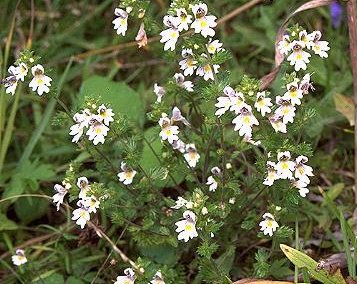
Eyebright
(Euphrasia officinalis): elements of Sun and Air. Anoint eyelids with the infusion daily to induce clairvoyant
visions.
Back to the herb list
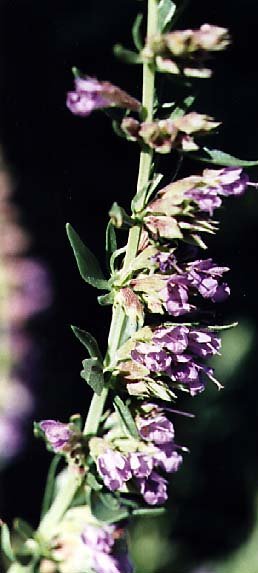
Hyssop
(Hyssopus officinalis): In tea form, used as an
expectorant for colds and catarrh. Said to expel intestinal worms. The
fresh leaves, or a decoction of them, can be applied to wounds to cure
infection and promote healing.
Elements of Jupiter and Fire. Use in purification baths and protection spells. Was a common strewing
herb during the Middle Ages, and used in the consecration of Westminster
Abbey. Associated with serpents and dragons, and can be burnt as incense
or thrown on the fire to tap into dragon energy.
Back to the herb list
Jasmine
(Jasminum officinaleor Jasminum
odoratissimum): Elements of Jupiter and Earth. Used in love spells and charms.
Back to the herb list
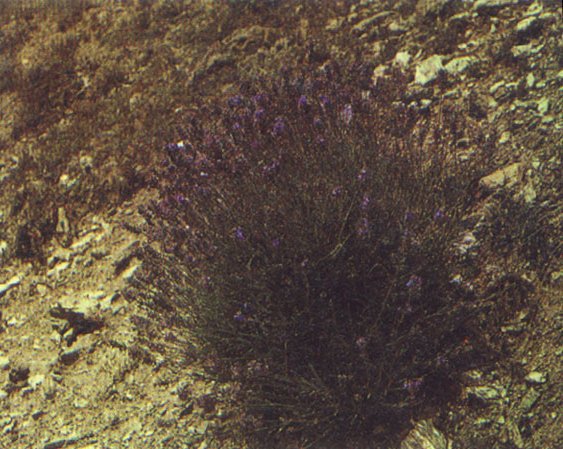
Lavender
(Lavendula vera or Lavendula officinale): Elements of Mercury and Air. Used in purification baths and incenses. Thrown
onto fires and Midsummer as tribute to the Gods and to bring visions and
inspiration. Add to healing baths and sachets, carry to attract men. The
scent will induce sleep. Excellent for bringing clarity and coherence to
magickal workings and for focusing visualization. When the oil of
it is applied immediately to a superficial burn that the redness and pain is
significantly reduced.
Back to the herb list
Orange
(Citrus sinesis): Elements of Sun and Water.
The dried peel is added to love and fertility charms and used in Solar
incenses. A traditional Chinese symbol of good luck and prosperity.
Back to the herb list
Peppermint
(Mentha piperata): Elements of Venus and Air. Use in healing incenses and charms; good in a healing bath. Burn as
a winter incense. Any mint infusion can be sprinkled around the house as
a cooling-off influence after arguments.
Back to the herb list
Rose
(Rosa spp.): Elements of Venus and Water.
Carry roses to attract true love. Drink a tea of rose petals for divinatory dreams. Add to charms and incenses for sleep, love and healing. To dream of roses is fortunate, foretelling success in love, unless the roses are white. Drink the tea to promote beauty without and within, and mix the
petals with regular tea to attract love.
Back to the herb list
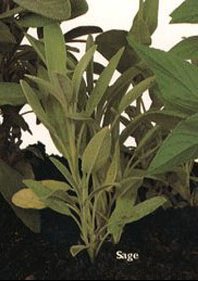
Sage
(Salvia officinalis): Elements of Jupiter and Earth. Used in healing and prosperity charms. Regarded as a great safeguard
of health, and has a reputation for promoting longevity. Is supposed to
grow best in the gardens of the wise.
Back to the herb list
Valerian
(Valeriana officinalis): Elements of Mercury and Water. Use the herb in love charms and spells, and in purification
baths.
Back to the herb list
Vanilla
(Vanilla aromatica or Vanilla
planifolia): Elements of Jupiter and Fire. The bean can be carried in a love charm, and
the oil worn as an aphrodisiac.
Back to the herb list

 Alfalfa
(Medicago sativa): can be drunk as a tea to improve
the appetite. Is supposed to aid in cure of peptic ulcers. Considered a
diuretic - will rid the body of retained water.
Alfalfa
(Medicago sativa): can be drunk as a tea to improve
the appetite. Is supposed to aid in cure of peptic ulcers. Considered a
diuretic - will rid the body of retained water.